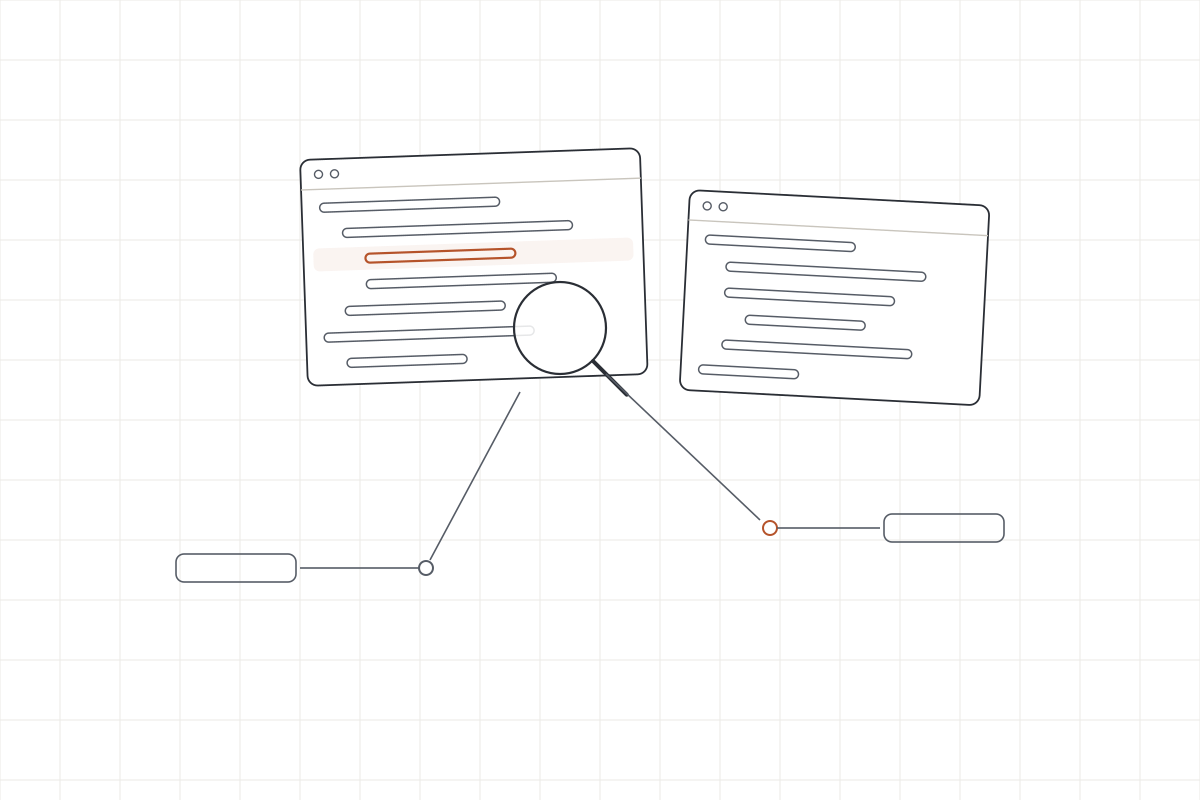
A secure code review is a security-focused examination of your application’s source code, combining automated scanning with a human actually reading the code, to find vulnerabilities before the software ships. If your business builds software, or pays someone to build it for you, it’s how you find out whether that code can be trusted with your customers’ data before an attacker checks for you. This guide explains what a review covers, how it works, what it costs, and, honestly, whether you need one at all. It’s written for the business owner or product owner making the call, not for the developers doing the work.
How it differs from a normal code review
Most software teams already review each other’s code. A teammate reads the changes, points out bugs and readability problems, and approves the merge. That is a peer review, and it is about quality: does the code work, is it clear, will it break something.
A secure code review asks a different question: how could someone abuse this? The reviewer is not checking whether the login page works. They are checking whether it can be talked into letting the wrong person through. Same code, completely different mindset.
It also helps to see where this sits next to the other security work you may have heard of:
| Peer code review | Secure code review | Penetration test | |
|---|---|---|---|
| The question | Does it work and read well? | Can this code be abused? | Can someone actually get in? |
| What gets examined | New code changes | Source code, configuration, dependencies | Your running systems and apps |
| Who does it | Another developer | A security reviewer plus scanning tools | A penetration tester |
| When it happens | Every change | During development, or once over an existing codebase | Typically yearly, or before a big launch |
If that third column is the one you need, start with our guide to what a penetration test is. The two are related but they are not the same thing, and we compare them directly in penetration testing vs secure code review.
What a secure code review looks for
The specifics vary by application, but most findings fall into a few plain-English buckets. The industry’s standard reference for these is the OWASP Top Ten, and a good review covers it and then some.
- Input that becomes commands. When an app takes what a user typed and passes it along carelessly, a form field can turn into a way to read the whole database. These injection flaws are decades old and still show up constantly.
- Login and permission logic that can be bent. The classic example: a logged-in customer changes a number in the URL and sees someone else’s invoice. The code checked that you were logged in, but not that the data was yours.
- Secrets sitting in the code. Passwords, API keys, and connection strings that a developer pasted in to get something working and never removed. Anyone who can see the code, or any leak of it, now holds real keys.
- Other people’s code. Modern applications are mostly assembled from open-source libraries. One stale library with a known flaw can undermine an otherwise careful codebase, so a review checks the dependencies, not just the code your team wrote.
- Quiet configuration problems. Debug modes left on, error messages that spill internal details, encryption that is configured but not actually enforced.
None of this requires a dramatic attacker. Most of it is ordinary code written under deadline pressure, which is exactly why a dedicated security pass finds things a busy team does not.
Automated scanning, a human, or both
Automated tools do part of this job well. Static analysis tools, software that reads source code looking for known-dangerous patterns, are fast, consistent, and never get tired. Dependency and secret scanners are the same story. If a known flaw pattern or a leaked key is sitting in the code, good tooling will usually flag it in minutes.
What tools cannot do is understand what your application is supposed to do. A scanner does not know that a discount field should never go negative, that a patient record should only be visible to the treating provider, or that step three of your checkout should be impossible to reach before step two. Those business-logic and design flaws are what human review exists for. Tools also flag plenty of things that turn out to be fine, and it takes a person to separate the real findings from the noise.
In practice, nearly every serious secure code review is a hybrid: automated scanning for breadth, human review for depth, focused on the code that matters most. That is also the approach recommended by OWASP’s Code Review Guide.
How a secure code review actually runs
The process is simpler than most vendor descriptions make it sound:
- Scope it. Agree on which applications and repositories are in, and which parts matter most: authentication, payments, anything that touches customer data. Scope gets set in writing, like any security engagement should.
- Run the automated pass. Scanners cover the full codebase and its dependencies and produce the raw findings list.
- Do the manual pass. A reviewer works through the high-risk areas by hand and triages what the tools flagged, keeping what is real and cutting what is not.
- Write it up in plain English. Each finding should say what it is, what it would let someone do, and how to fix it, in priority order. A report your developers argue about is fine. A report nobody reads failed.
- Verify the fixes. After remediation, the important findings get rechecked so you know they are actually closed.
Do you actually need one?
Here is the honest answer most vendors will not give you: if nobody writes or customizes software for your business, you do not need a secure code review. There is no code of yours to review. Your risk lives in your networks, your accounts, and your configurations, and a penetration test is the tool that measures it.
A secure code review starts to matter when:
- You ship software to customers, whether that is a SaaS product, a mobile app, or a customer portal.
- You have custom-built integrations or internal tools that handle sensitive data.
- A customer or prospect sends a security questionnaire that asks how your code is reviewed, which is increasingly common in B2B sales.
- A framework like SOC 2 or PCI DSS is in your future and your auditors will ask about secure development practices.
- You inherited a codebase, through an acquisition or a handoff from a development shop, and you want to know what you actually bought.
If two or more of those sound like you, a review is worth scoping, and our secure code review services page covers how that works. If none of them do, spend the money on testing your running environment instead.
What it costs and how long it takes
Secure code reviews are priced by the size and complexity of the codebase: how much code, in how many languages, with how much high-risk surface like authentication and payments. A focused review of one application’s critical paths can be a matter of days. A sprawling legacy codebase can take weeks. Anyone quoting a price before looking at the repository is guessing, so expect a short scoping conversation first, and expect the scope in writing.
For comparison, we publish our penetration testing prices openly on our pricing page, and we take the same approach to secure code review quotes: a fair, fixed number after scoping, not an hourly meter running against you.
Frequently asked questions
What is the difference between a code review and a secure code review?
A standard code review checks quality: does the code work, is it readable, does it follow the team’s standards. A secure code review checks abusability: whether the code can be tricked, bent, or bypassed by someone hostile. The mindset, the checklists, and usually the reviewer are different.
How long does a secure code review take?
It scales with the codebase. A focused review of one application’s high-risk areas often runs a few days to a week. Large or legacy codebases with multiple languages can take several weeks. Scoping determines the timeline up front, so you should know before work starts.
Is a secure code review the same as a penetration test?
No. A code review reads your source code from the inside; a penetration test attacks your running systems from the outside. They find different problems and complement each other. We compare them side by side in penetration testing vs secure code review.
What tools are used in a secure code review?
Typically static analysis scanners that read source code for dangerous patterns, dependency checkers that flag known-vulnerable libraries, and secret scanners that catch committed credentials. The tools provide breadth. The conclusions, and the judgment about what actually matters, come from a human reviewer.
The bottom line on secure code reviews
A secure code review is how you find out whether the software your business depends on can be trusted before someone hostile finds out for you. If you build or customize software, it belongs in your security plan alongside testing your running environment. If you don’t, skip it with a clear conscience and test what you actually have. Either way, you should know where you stand. Tell us a little about what you have built and what is prompting the question, and we will give you a straight answer about which kind of assessment fits, with a fair, fixed quote. Request a quote.
Want to know where you stand?
Tell us a little about your business and what is prompting the test. We will come back with a fair, fixed quote.
Request a quote