How Much Does an Internal Penetration Test Cost?
By Kip LeGate, Chief Security Officer
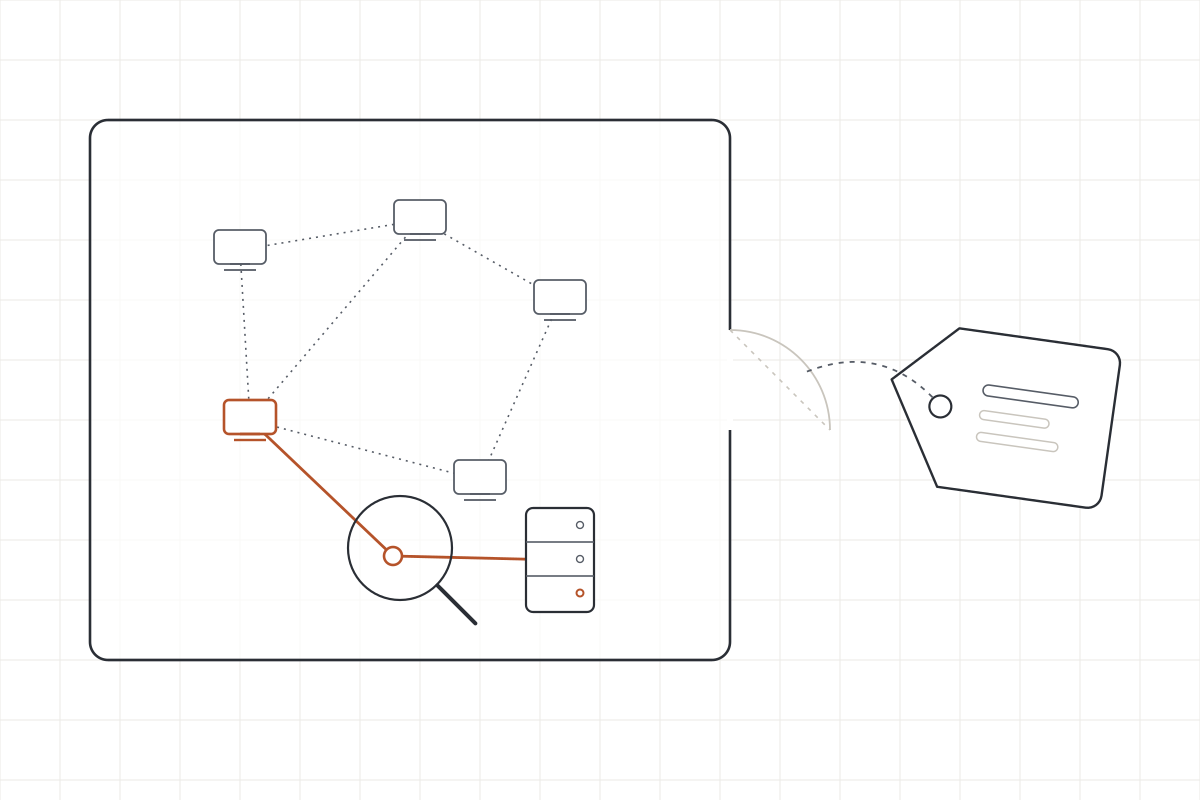
An internal penetration test at azpentest starts at $6,500, and that number includes external testing too, because we sell the two together as one full engagement with the retest included. If you were braced for a mystery number behind a “request a quote” wall, that is the answer up front. This guide is for the business owner who has been told they need internal testing, by an insurer, a client contract, or their own good judgment, and wants to know what the money actually buys before signing anything.
What an internal penetration test is, in one paragraph
An internal penetration test starts from an uncomfortable but realistic assumption: someone is already inside your network. A phished laptop, a bad attachment, a contractor’s compromised account. The tester begins from that foothold and answers the question every owner should know the answer to: how far does it go? In most small and mid-sized businesses, the answer is decided by boring things, reused passwords, a flat network, accounts that should have been disabled months ago, and a hands-on tester finds the chain that connects them. We cover the full engagement on our internal penetration testing service page; this post is about the price.
The number, and why it includes external
Here is our published pricing, with internal testing in context:
| If you are testing | Where pricing starts |
|---|---|
| Your internet-facing setup only (external) | from $4,000 |
| External plus your internal network | from $6,500 |
| External, internal, web app, and phishing | from $10,000 |
Retests are included on every tier. Once you fix what we find, we verify the fixes at no extra charge, because a fix list nobody confirms is just a list.
Why bundle internal with external instead of selling it alone? Because the two halves answer complementary questions. External testing asks what an outsider can reach; internal testing asks what happens after one inevitable mistake lets someone in. Testing only the inside while ignoring the outside leaves you with half a picture, and nearly every requirement that names internal testing, cyber-insurance questionnaires, client security reviews, PCI for merchants that store card data, expects both. If you genuinely only need the internal half, that is a scoping conversation and we will quote it honestly, but most businesses asking for internal testing are best served by the full engagement, and the bundled price reflects that instead of stacking two separate invoices.
For the wider market picture: published cost guides from Astra and BrightDefense put typical penetration tests anywhere from $5,000 to $50,000 or more, with averages often cited near $18,000. Those ranges cover everyone from startups to banks. We wrote a full breakdown of general pentest pricing in how much does a penetration test cost; the short version is that our numbers sit below the national average for the same manual work, and we publish them so you can budget before the sales call instead of during it.
What moves the internal price
When an internal test quote goes above the starting number, it is built from a handful of honest factors:
- The size of your environment. More systems, more servers, more user roles to check means more skilled hours. A ten-person office with one server is a different engagement than a company with hundreds of employees and a rack of infrastructure.
- Multiple locations. Each office or site in scope adds surface: its own network, its own equipment, its own connections back to everything else.
- How your network is built. A segmented network takes longer to test properly than a flat one, because the tester has to evaluate each boundary. Worth saying: a flat network is not an automatic crisis, but it does decide the blast radius, and the test will show you exactly what that radius is.
- Compliance documentation. If the report needs to satisfy an insurer, an auditor, or a framework in a specific format, that shapes the write-up and sometimes the testing method.
Notice what is not on the list: having servers, a domain, remote access, or any other normal infrastructure. Those are supposed to exist. They do not raise your price and they are not findings.
What the money actually buys
The cost of an internal test is mostly skilled human time, and it helps to know what that person is doing with it. An automated tool run from inside your network will list known vulnerabilities, and that list has value. But the thing that actually gets businesses compromised is rarely one glaring hole. It is a chain: a foothold on one workstation, a cached credential found there, a shared drive everyone can read, a path from that drive to something that matters. Chaining those small findings together takes judgment, patience, and experience, and no scanner does it. That is the work you are paying for, and it is the difference between a report that says “patch these 40 things” and one that says “here is the actual path from a phished laptop to your finances, and here are the three fixes that break it.”
That difference matters when you shop on price. If a quote for an “internal penetration test” comes in dramatically cheap, ask whether a person will actually work from a foothold and try to move, or whether a scanner will be pointed at your network from the inside. A scan run from inside is still a scan. We wrote up the distinction plainly in penetration test vs vulnerability scan, and it is the first question worth asking of any quote, including ours.
The logistics, briefly
Two practical points that surprise people. First, internal testing usually does not require anyone on-site: the foothold is typically a small device we ship to you, or a controlled remote connection, standing in for the compromised laptop the test assumes. Second, the timeline is measured in days, not months; most full engagements run one to two weeks from scoping to report, and we cover the schedule in how long does a penetration test take.
Where to start
If internal testing is on your list, the fastest way to a real number is a short scoping call: how big is the environment, how many locations, what is prompting the test. You will get a fair, fixed quote against a written scope, with the retest included and no hourly meter. See the full pricing for the starting points, or tell us a little about your business and we will come back with a straight answer. Request a quote. No pressure, no scare tactics.
Want to know where you stand?
Tell us a little about your business and what is prompting the test. We will come back with a fair, fixed quote.
Request a quote