Continuous Code Monitoring
Blindsight: continuous security monitoring for your code
A penetration test is a point in time. New vulnerabilities in the open-source code your software depends on are published every day. Blindsight is the managed service that watches your code and its dependencies continuously, cuts the false alarms, and hands you one plain report plus audit-ready evidence.
Managed and triaged by a person. Transparent pricing from $500/mo. Audit-ready evidence.
Get a fair, fixed quote
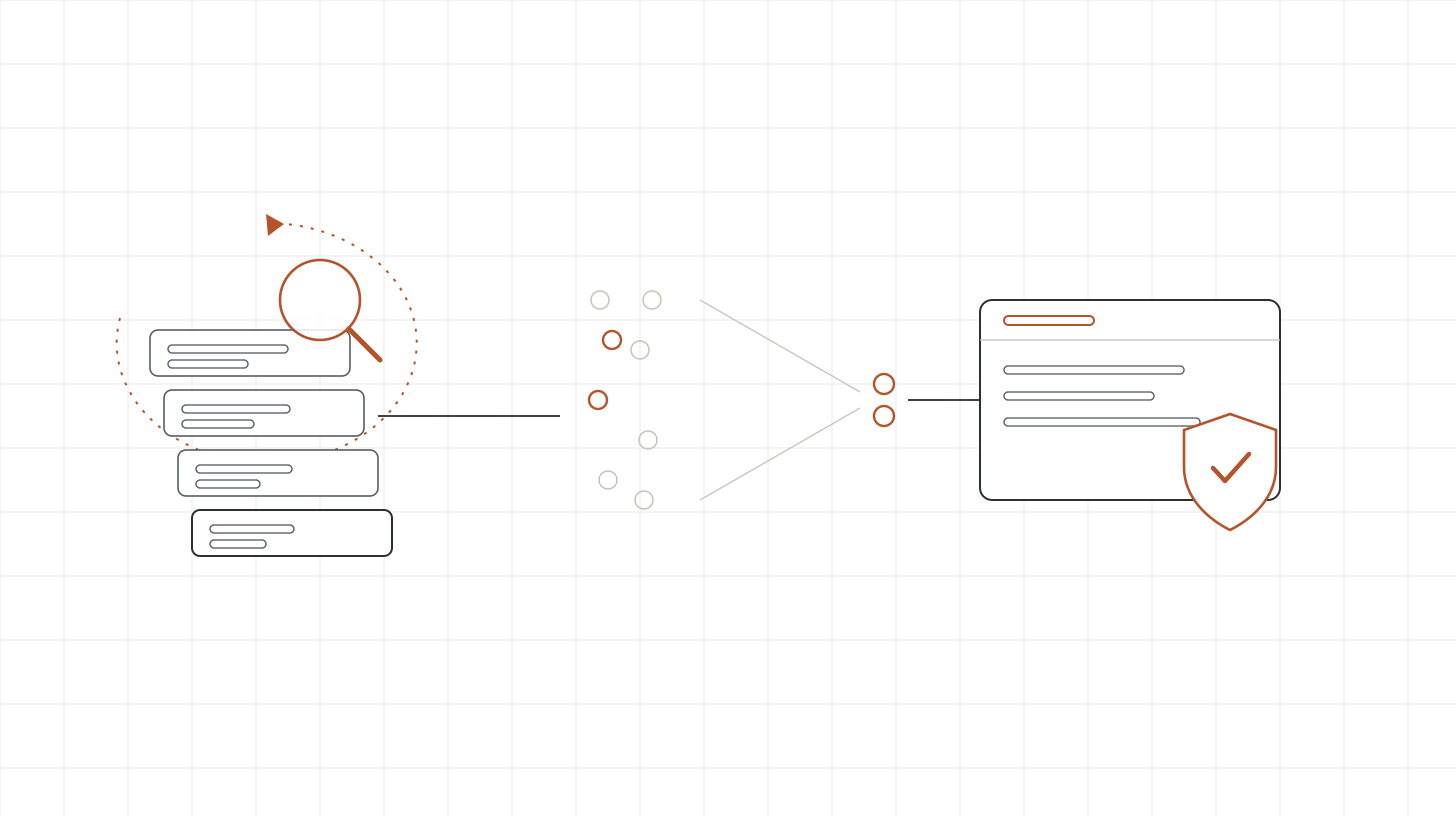
Most software today is assembled from open-source parts, and the security of those parts changes daily. The code you shipped perfectly clean last month can become vulnerable this month without you touching a line, simply because a flaw was found in a component it already uses. Checking once a quarter leaves long windows where you are exposed and do not know it. Blindsight closes those windows. It is continuous scanning, run and triaged by us, so you get a short list of what genuinely matters instead of a firehose of alerts, and proof you can show an auditor or insurer.
What it watches
Four kinds of risk in the code you ship
Blindsight looks at the code you build and ship and the parts it is made of, which is where most known-vulnerability risk actually lives.
Known vulnerabilities in your dependencies
Your software is built on open-source libraries, and new CVEs in them are published every day. We track them continuously and tell you the moment one lands in code you already ship, not months later.
Risky patterns in your own code
Static analysis flags the classes of flaw that lead to real compromise, like injection, weak crypto, and unsafe handling of input, before they reach production.
Secrets that slipped into the code
Passwords, API keys, and tokens committed by accident are one of the most common ways attackers get in. We catch them so you can rotate them before someone else finds them.
Misconfigured containers and infrastructure
The settings around your code matter as much as the code. We check your container images and infrastructure-as-code for the defaults and mistakes that quietly leave a door open.
What you get
A managed service, not another tool
Anyone can buy a scanner. The value is in running it well, reading it, and cutting the noise. That is the part we do, every cycle.
- 01
We run it, not you
You do not stand up scanners or babysit a dashboard. Blindsight runs on your build and on a schedule, managed by us, so the coverage is continuous without adding to your team.
- 02
We cut the noise
Raw scanners are loud: duplicates, false alarms, and severity labels that do not match reality. We triage every run so what reaches you is real, deduplicated, and ranked by how much it actually matters.
- 03
You get one plain report
A short, plain-English report of what matters and what to do about it, not a thousand-line export nobody reads. Written to be acted on by your team or your existing IT provider.
- 04
And audit-ready evidence
Every run produces an evidence bundle you can hand a cyber-insurance underwriter or a SOC 2, PCI, or HIPAA auditor as proof that your code is monitored, continuously, not once a year.
Pricing
Transparent monthly pricing
A flat monthly fee by scope, published up front. What moves the number is how many applications you want covered, not how many developers you have.
One Codebase
$500/mo
starting from
A single application or codebase
- Continuous scanning on every build, weekly, and on new-CVE disclosure
- Dependencies, code, secrets, and configuration covered
- A triaged, plain-English report each month
- An audit-ready evidence bundle
Best for: A business with one product or app to protect
Request a quoteUp to Five Apps
$1,000/mo
starting from
Up to five applications or codebases
- Everything in One Codebase, across up to five apps
- A quarterly review call to walk through trends and priorities
- Consolidated reporting across your applications
Best for: A growing software team or a small SaaS
Request a quoteEnterprise
Custom
scoped to your estate
Larger estates, custom scope
- More applications, tighter cadence, and deeper coverage
- Integration into your own build pipeline
- Framework-mapped evidence for your specific audits
Best for: Multi-app environments and formal compliance programs
Request a quoteAn optional one-time baseline scan and prioritized fix roadmap starts at $1,000. We discount the monitoring when it is paired with an annual penetration test, so you get the deep periodic look and the continuous coverage together.
Where it fits
The other half of a penetration test
Think of a penetration test as a thorough inspection of the building once a year, and Blindsight as the smoke detector that watches every day in between. You would not rely on either one alone. The pentest finds the chained, real-world attack paths a human uncovers; Blindsight makes sure a vulnerability disclosed the week after your test does not sit in your software unnoticed until the next one. The same pairing works for your source code: a secure code review is the deep human read, and Blindsight keeps watch between reviews.
If you want the background, our field notes cover how often you should scan dependencies, the difference between a penetration test and a vulnerability scan, and what a penetration test actually involves.
Why us
Why run it with Blindsight
Managed, not another dashboard
Plenty of tools will sell you a scanner and a login. The work is in running it, reading it, and cutting the false alarms. That is the part we do, so you get answers, not another screen to check.
Triaged by a person, ranked by real risk
A raw scan is mostly noise. We separate the genuine, exploitable findings from the theoretical ones, so your team spends its time on what actually reduces risk.
Audit and insurance-ready evidence
Continuous monitoring produces continuous proof. The evidence bundle answers what an auditor or a cyber-insurance underwriter asks for, which a single point-in-time scan cannot.
An independent specialist
We run as our own security practice, a Desert Lakes Solutions company, so the work reads as a genuine outside opinion, not an upsell from whoever built your software.
Transparent monthly pricing
Our pricing is on the page. Most managed security services make you sit through a sales call just to learn the number. We would rather you know up front.
FAQ
Continuous code monitoring: common questions
- What is Blindsight?
- Blindsight is a managed continuous code-scanning service. We run a set of trusted, industry-standard scanners on your codebase, on every build and on a schedule, remove the duplicates and false alarms, rank what is left by real-world severity, and hand you one plain-English report plus an audit-ready evidence bundle. You get continuous coverage without your team having to run anything.
- How is Blindsight different from a penetration test?
- A penetration test is a periodic, hands-on assessment where a human tries to break in. Blindsight is continuous and automated: it watches your code and its dependencies for known vulnerabilities every day, in between those tests. They are complements, not substitutes. The pentest is the deep look once a year; Blindsight keeps you covered the rest of the time.
- What does Blindsight actually scan?
- Your source code, its open-source dependencies (direct and the ones those pull in behind the scenes), secrets accidentally committed to the code, and the configuration of your containers and infrastructure-as-code. It looks at the code you build and ship, which is where most known-vulnerability risk lives.
- What do I get each month?
- A short, plain-English report of the findings that actually matter, ranked by real severity, with clear guidance on what to fix first, plus an evidence bundle you can hand to an auditor or cyber-insurance underwriter. Not a raw export, and not a dashboard you have to log in and interpret yourself.
- How much does continuous code monitoring cost?
- Blindsight starts at $500 a month for a single codebase and $1,000 a month for up to five applications, with custom pricing for larger environments. An optional one-time baseline scan and fix roadmap starts at $1,000, and we discount the monitoring when it is paired with an annual penetration test.
- Do I need this if I already get a penetration test?
- If you build or ship software, yes, they cover different windows. A pentest is a point in time; new vulnerabilities in your dependencies are published every day after it. Continuous monitoring closes that gap, so a flaw disclosed the week after your test does not sit exploitable until the next one.
See what is hiding in your dependencies
Tell us what you build and how many applications you want covered. We will come back with a scope and a fair, fixed monthly quote. No pressure, no sales theater.